
IMF Says Ghana Is Better Positioned to Withstand Global Economic Shocks
The International Monetary Fund (IMF) says Ghana is better positioned to withstand potential global commodity-price shocks, citing improvements in economic performance and a recent credit-rating upgrade as signs of progress in the country’s recovery.
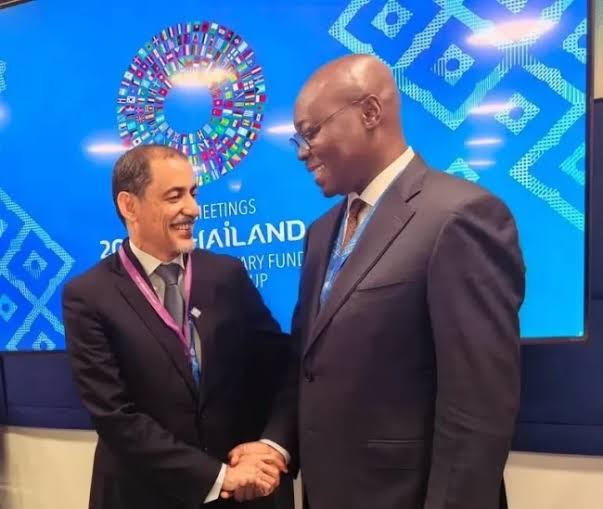
The assessment comes as the IMF and the World Bank conclude their 2026 Annual Meetings in Bangkok, Thailand, with Ghana transitioning from its completed Extended Credit Facility (ECF) programme to a new phase of economic reforms under the Policy Coordination Instrument (PCI).
Director of the IMF’s African Department, Zeine Zeidane, said Ghana’s performance under the new programme had been strong so far, expressing confidence in the country’s economic direction.
“The performance has been strong up to now. And also, you certainly have seen that recently, there was an upgrade of Ghana. So, things are moving in Ghana in the right direction,” he said.
Speaking at a press briefing on Sub-Saharan Africa during the meetings, Mr Zeidane acknowledged that fluctuations in global commodity prices remained a potential risk for countries, including Ghana. However, he maintained that the country was now better equipped to manage such external shocks.
“Of course, the risk in terms of commodity prices, every country can face them, but I think Ghana is, if that happens, we will face them from a very strong position,” he added.
The IMF’s assessment aligns with its improved growth outlook for Ghana. In its October 2026 World Economic Outlook, the Fund raised the country’s projected economic growth for 2026 to 5.7 per cent, up from the 4.6 per cent forecast in April. Growth is, however, expected to moderate to 5.2 per cent in 2027.
Ghana’s transition to the PCI is expected to help consolidate the gains achieved under the ECF programme while advancing reforms in fiscal management, debt sustainability, governance and financial-sector stability.
Unlike the previous bailout programme, the PCI does not provide direct financial assistance. Instead, it provides a framework for policy monitoring and reform implementation to help countries maintain economic stability and strengthen investor confidence.
Despite the improved outlook, Ghana faces the challenge of translating macroeconomic gains into sustained, inclusive growth while shielding the economy from external volatility and maintaining discipline in public spending.
The country’s exposure to fluctuations in global commodity prices remains a concern, making continued reforms and prudent economic management critical to sustaining the recovery.
As the Bangkok meetings conclude, the IMF’s assessment offers an encouraging signal for Ghana’s economic prospects. However, sustaining the gains will depend on the government’s commitment to implementing reforms, strengthening public finances and building resilience against future external shocks.
Source: Sekunde FM




About the Author