
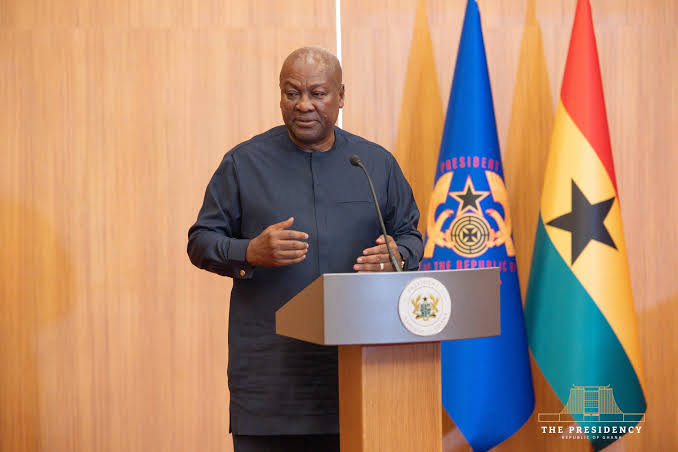
Mahama unveils US$10bn investment plan to create jobs under New Economy Policy
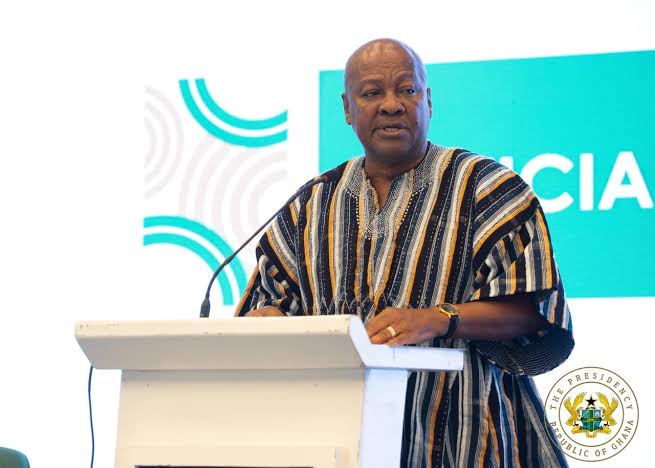
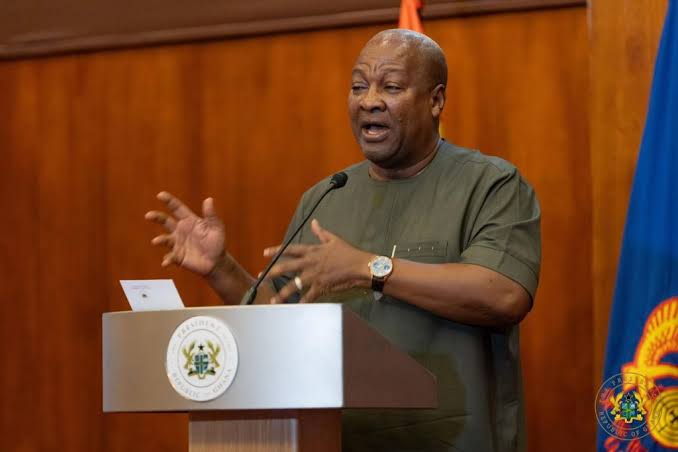
President John Dramani Mahama has announced plans to invest US$10 billion over five years in nine key sectors of the economy under the proposed New Economy Policy, aimed at accelerating job creation and expanding economic opportunities for Ghanaians.
The initiative will channel US$2 billion annually into productive sectors with significant employment potential, including textiles and garments, agriculture and agribusiness, pharmaceuticals and tourism.
President Mahama said the programme would be financed with domestic resources rather than borrowing, as the government seeks to consolidate economic recovery, stimulate private-sector growth and create sustainable jobs.
“When the Minister presents the 2027 Budget, he is going to announce what we call the New Economy Policy. The policy has selected nine areas, or nine pillars, in which the government is going to invest about US$2 billion every year for five years. That is a total of US$10 billion,” he said.
“As I have said, this is our own money. We are not going to borrow money for the New Economy Policy.”
The President announced the investment plan during a courtesy call by chiefs from the Western North Region, where he outlined measures to strengthen the economy and expand employment through industrialisation and private-sector investment.
He said the economy was recovering from the debt default and economic crisis that confronted his administration when it assumed office on January 7, 2025.
According to him, the International Monetary Fund (IMF) had projected Ghana’s economic growth at 5.7 per cent, exceeding the average forecast of about four per cent for sub-Saharan Africa.
“Just yesterday [Friday], the IMF predicted that we would grow at 5.7 per cent,” he said, expressing confidence in the economy’s performance despite external pressures, including rising petroleum prices linked to tensions between Iran and Israel.
President Mahama attributed the improvement to the government’s fiscal measures, which he said had helped stabilise the macroeconomic environment, lower interest rates and improve access to credit for businesses.
He explained that reduced government borrowing from domestic banks had eased pressure on the financial sector, allowing banks to channel more funds into private-sector activities.
“Today, the government is living within its means, and everything we are financing is being financed from our taxes and what the government brings into the Exchequer,” he said.
He added that the government was no longer borrowing from domestic banks or international credit markets, creating more room for financial institutions to support businesses seeking to expand their operations.
The President said Treasury bill rates had fallen from approximately 29 per cent to about seven per cent, making lending to private businesses more attractive to banks.
“It is better for them to lend at about 13 per cent to a private company. That is going to enable private companies to invest, expand their businesses and employ more people,” he said.
Infrastructure and manufacturing drive job creation
President Mahama said the construction industry was already generating significant employment through the government’s Big Push infrastructure programme.
He cited the demand for skilled workers, including excavator operators, civil engineers, masons and steel benders, as evidence of the opportunities being created by ongoing road and building projects.
“The construction industry alone has created hundreds of thousands of jobs because of the Big Push and the money the government is putting into infrastructure,” he said.
Beyond infrastructure, the government is also promoting investment in manufacturing and other sectors with the potential to generate large numbers of jobs.
The President cited a textile manufacturing factory in northern Ghana, established with support from the Ghana Export-Import Bank, which produces garments for export to the United States and European markets.
He said the factory employed about 2,300 people, approximately 80 per cent of whom were women, and operated under the 24-hour economy model.
According to him, the facility was creating employment opportunities for young women who might otherwise migrate to major cities to engage in head porterage, popularly known as kayayei.
He also pointed to production-line expansions by companies such as Nestlé and Kasapreko as examples of businesses increasing their capacity and creating additional employment opportunities.
President Mahama said the government would continue to improve the business environment and direct public investment towards sectors capable of delivering sustainable jobs and supporting long-term economic growth.
Pharmaceutical hub to support industrialisation
Under the New Economy Policy, the government will also prioritise pharmaceutical manufacturing, with the aim of positioning Ghana as a production hub for West Africa and the wider African market.
President Mahama disclosed that foreign pharmaceutical companies had expressed interest in establishing facilities at a pharmaceutical hub for which the government had acquired land and provided essential infrastructure, including roads, electricity and water.
He said the initiative formed part of a broader strategy to strengthen domestic production, reduce dependence on imports and create employment opportunities for young people.
The proposed US$10 billion investment programme is expected to complement infrastructure spending and private-sector expansion by directing resources towards industries that can increase local production, strengthen Ghana’s export capacity and generate employment.
President Mahama expressed optimism that the combined impact of the Big Push infrastructure programme, manufacturing expansion and targeted investments under the New Economy Policy would accelerate job creation, strengthen the productive economy and improve livelihoods across the country.
Source: Sekunde FM




About the Author