
China’s development offers valuable lessons for the Global South - Opoku-Agyemang
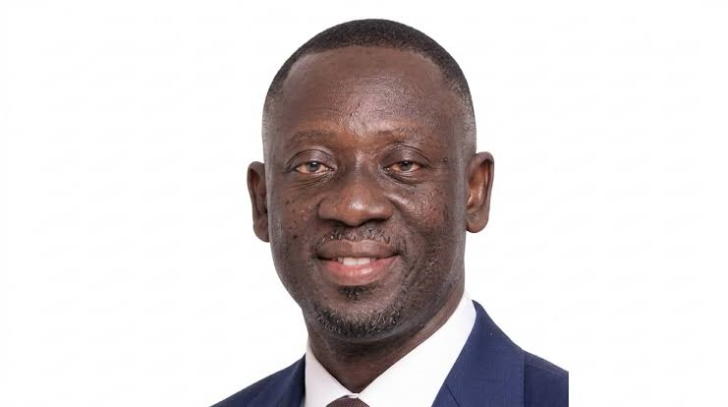
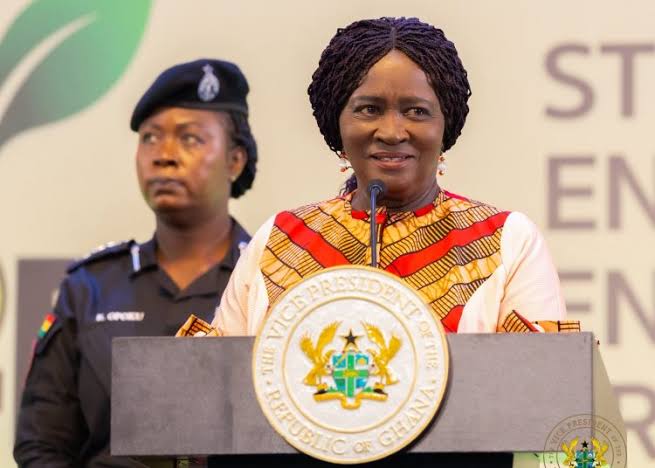
Vice President Professor Jane Naana Opoku-Agyemang has urged countries in the Global South to draw lessons from China’s development experience while pursuing development pathways that reflect their own political systems, institutions and national priorities.
She made the call at the 2026 Global South Academic Forum in Shanghai, China, where scholars and policymakers gathered to discuss governance and development.
Professor Opoku-Agyemang described China’s transformation over the past several decades as one of the most significant development stories of the modern era, highlighting its experiences in long-term planning, industrialisation, poverty reduction and institutional development.
She, however, cautioned against assuming that China’s model could be replicated wholesale by other countries, noting that its development trajectory had been shaped by its unique history, political system, institutions and national priorities.
“Our task is to develop the intellectual confidence to compare experiences, identify lessons, and recognise that institutions must ultimately reflect the societies they are intended to serve,” she said.
The Vice President encouraged scholars and policymakers across the Global South to examine the factors underpinning China’s progress, including the role of the Communist Party of China in shaping the country’s development trajectory.
She said such an assessment would enable developing countries to identify policies and strategies that could be adapted to their own circumstances.
Professor Opoku-Agyemang stressed that South-South cooperation should create opportunities for countries to share experiences, assess successful policies, learn from failures and avoid mistakes made by others.
“The most productive principle for South-South dialogue is that we should learn from one another without assuming that we must become one another,” she said.
She added that countries should approach such exchanges with both confidence and humility, allowing them to compare development experiences and understand the institutions and policies that had contributed to progress in different contexts.
“We can, however, sit across from one another with sufficient confidence and humility to compare what worked, what failed, which institutions enabled progress, and which mistakes others might avoid. That is one of the highest purposes of South-South cooperation,” she said.
The Vice President also called on countries in the Global South to intensify efforts towards national development, emphasising that political independence alone was not enough to guarantee economic transformation and improved living standards.
She urged governments to strengthen public institutions, invest in education and infrastructure, and build productive economies capable of delivering sustainable and inclusive growth.
Professor Opoku-Agyemang maintained that countries must translate their political independence into tangible development outcomes by pursuing policies suited to their respective national circumstances.
Her remarks underscored the importance of international cooperation and knowledge-sharing in helping developing countries identify practical solutions to their development challenges without necessarily adopting the political and institutional arrangements of other nations.
Source: Sekunde FM




About the Author