
Ghana’s economic reset agenda showing positive outcomes, Trade Minister tells UK investors
The Minister for Trade, Agribusiness and Industry, Elizabeth Ofosu-Adjare, has called on British investors to strengthen their participation in Ghana’s economy, highlighting the nation’s robust macroeconomic recovery, ongoing regulatory reforms, and strategic position as a gateway to Africa.
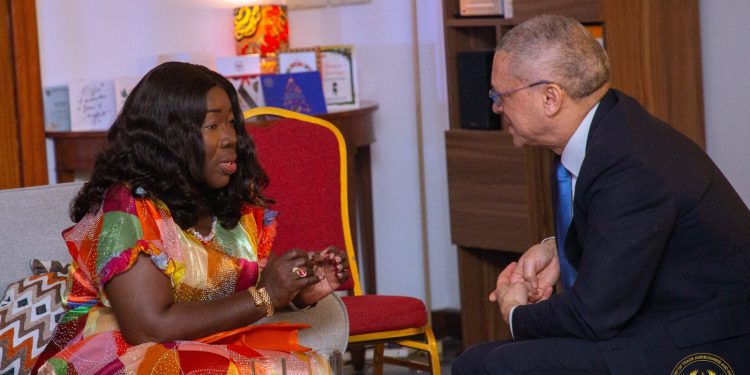
She made the appeal during a reception in Accra on Thursday, January 29, 2026, held in honor of the Board of Directors of British International Investment (BII) and hosted by the British High Commissioner to Ghana, Dr Christian Rogg.
Minister Ofosu-Adjare noted that Ghana’s economic reset agenda under President John Dramani Mahama is already producing tangible results, restoring investor confidence and enhancing the business climate. She cited the country’s 5.5 per cent GDP growth in the third quarter of 2025—the strongest since 2020—as evidence of the government’s efforts to stabilize the economy and implement deep structural reforms.
“Ghana offers what UK investors value most — stability, transparency, and partnership,” she said, describing the country as one of Africa’s most stable democracies, with strong institutions and a history of peaceful political transitions.
The Minister outlined comprehensive business regulatory reforms designed to reduce bureaucracy, digitize public services, and lower the cost of doing business. Key areas of reform include customs administration, tax filing, and business licensing processes.
Highlighting Ghana’s strategic advantage, she emphasized the country’s role as host of the African Continental Free Trade Area (AfCFTA) Secretariat, providing investors access to a 1.4 billion-strong market across 54 countries, with a combined GDP exceeding US$3.4 trillion.
On bilateral trade, she reported that the Ghana–UK Trade Partnership Agreement had opened new avenues for private sector growth. By June 2025, total trade between the two countries reached £1.5 billion, up 5.7 per cent from the previous year. UK exports to Ghana rose 22.1 per cent to £888 million, while Ghana’s exports to the UK totaled £640 million, led by cocoa paste, tropical fruits, and processed fish.
Minister Ofosu-Adjare also highlighted government initiatives under the Jobs and Economic Transformation (JET) Programme, including the Accelerated Export Development Programme, Rapid Industrialisation for Jobs, and a flagship Agribusiness Programme promoting agro-processing, value addition, and commercial farming. She urged BII and other UK institutions to partner with Ghana in priority sectors such as agribusiness, pharmaceuticals, textiles and garments, automotive manufacturing, renewable energy, healthcare, fintech, and logistics infrastructure.
The Minister drew attention to significant macroeconomic gains, noting that inflation had fallen from 54 per cent in December 2022 to 5.4 per cent by December 2025, while the Ghana cedi was recognized as Africa’s best-performing currency in 2025 by the International Monetary Fund. Ghana’s fiscal discipline had also led to sovereign rating upgrades from Fitch, Moody’s, and S&P.
She announced key tax reforms in the 2026 Budget, including the removal of VAT on mineral reconnaissance and prospecting, the extension of zero-rating for locally manufactured textiles to 2028, and the introduction of digital VAT monitoring systems to enhance transparency and compliance.
Finally, Minister Ofosu-Adjare revealed plans for a high-level Ghana investment forum in London later this year, to be hosted by the Ghana High Commission in collaboration with UK partners. “Ghana is open for business,” she said. “Let us turn today’s conversations into joint ventures and build supply chains that reflect both Ghanaian resilience and UK innovation.”
Source: Sekunde FM
About the Author